kakobuy Training Shoe Stability Guide
kakobuy Training Shoe Stability Guide
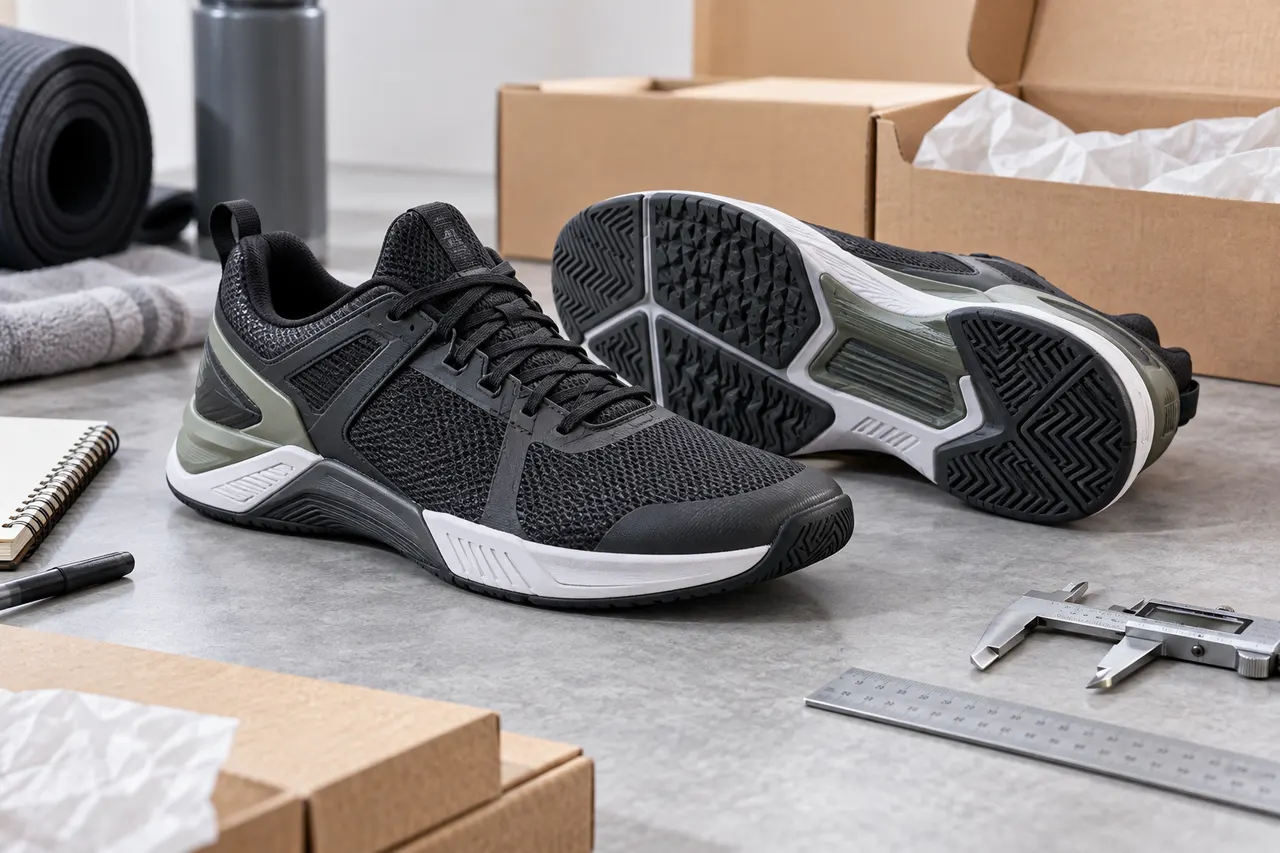
Caption: Training shoe stability checklist diagram for organizing observation points before ordering and during QC.
Training shoes are not just about appearance, colorways, or sole thickness. For users purchasing training shoes from Chinese e-commerce platforms through kakobuy, the more practical question is: with limited product page information and no option to try on, how can you judge whether a shoe is more suitable for squats, jumps, lateral movements, or just casual gym wear?
This article focuses on one achievable task: establish a training shoe stability review method before ordering, and after QC photos are available from the warehouse, decide whether to ship, request a return/exchange, or switch to a more suitable model. This article does not judge whether a brand is authentic, does not promise that a certain shoe is definitely suitable for high-intensity training, and does not replace professional sports injury advice. If you have existing ankle, knee, arch, or Achilles tendon issues, prioritize advice from a doctor, physical therapist, or professional coach.
The verification date for kakobuy platform information referenced in this article is 2026-09-08. Verifiable platform conditions include: kakobuy provides agent purchasing for Chinese goods, warehouse inspection, and international freight forwarding services; after items arrive at the warehouse, inspection photos are usually viewable; platform information shows free storage period is 100 days, and abnormal parcel period is 60 days; within 120 hours after warehouse receipt, 5-day no-reason returns/exchanges are supported, but custom items, restricted items, adult products, intimate apparel, food, and items where the buyer requested removal of packaging, tags, or accessories may not be applicable. Always confirm with kakobuy current pages, seller pages, and order status before ordering and shipping.
Define Training Movements and Main Risks First
When choosing training shoe stability, the first step is not to ask which shoe is best, but to write down your most frequent movements. Different movements have different shoe requirements, and mixing them together often leads to buying shoes that look sturdy but are actually unsuitable.
If you mainly do strength training like squats, deadlifts, and presses, focus on whether you stand stably, whether the heel doesn't wobble, and whether the sole doesn't collapse sideways due to being too soft. During squats, excessively thick, soft, or noticeably tilted midsoles can blur foot feedback and make knee and hip tracking harder.
If you mainly do burpees, box jumps, jump rope, HIIT, focus on landing cushioning and lateral support balance. Too hard shoes may be uncomfortable on landing, while too soft shoes may cause ankle instability after repeated jumps.
If you mainly do agility ladder, side lunges, tennis-style lateral movements, all-around fitness classes, focus on the shoe upper sidewalls, lacing, heel cup, and outsole edges. Lateral movements fear the upper not wrapping the foot enough, with the foot pushing sideways while the upper lags.
If it's just for commuting, light equipment, slow treadmill walking, and casual gym wear, stability requirements can be lower, but still avoid obviously crooked, mismatched left/right shapes, overly narrow soles, or collapsed soft heels.
A simple judgment sequence: first determine main movements, then determine the most unacceptable risk. For example, squat users cannot accept lateral wobble, jump users cannot accept unstable landings, lateral movement users cannot accept foot sliding out of the footbed. This makes screening clearer 🏋️.
Explain That This Article Only Makes Observable Support Judgments
When buying training shoes through kakobuy, buyers typically go through discovering items, submitting agent orders, sellers shipping to warehouse, warehouse inspection, viewing QC photos, selecting international routes, consolidating or shipping separately, tracking logistics, customs clearance and receipt, and after-sales handling. Key review points for training shoe stability focus on two stages: product page information before ordering, and QC photos after warehouse receipt.
This article only makes observable support judgments, i.e., based on product page images, size charts, sole shape, upper structure, QC photos, and order information to reduce the risk of buying wrong. It cannot do these things:
Cannot judge real foot feel, rebound, and long-term durability through pictures.
Cannot prove that the item is authentic, original factory, or consistent within the same batch.
Cannot guarantee no injury during training.
Cannot replace size judgment after trying on.
Cannot treat seller's promotional language as fact.
kakobuy's inspection rules mainly verify appearance information such as style, quantity, color, size, model; shoes can usually be judged roughly through appearance photos, but warehouse QC is not equivalent to athletic performance testing. Therefore, buyers should treat QC photos as evidence for "whether to proceed with shipping", not proof that "the shoe will definitely be comfortable".
Check Sole Width and Ground Contact Area for Standing Stability
Training shoe standing stability is easiest to start from sole width, outsole ground contact area, and midsole shape. Before ordering, look at the product main image, side view, heel view, and sole view together; don't just look at model on-foot photos. Model photos often emphasize styling and may not clearly show support structures.
Shoes suitable for strength training usually need a wider forefoot and heel ground contact area. You can observe whether the sole visibly flares outward, especially at the forefoot lateral side and heel sides. If the upper looks wide but the outsole is actually narrow, the foot may still feel unstable under load.
Midsole thickness also matters. Thick midsoles are not necessarily bad, but if the sole is tall, soft, and curved like running shoes, squats may cause more front-back rocking. Squats and deadlifts are better with clear platform, stable heel, and lateral edge support. Jump training can accept some cushioning but avoid structures that are too high and tapered at the edges.
When looking at sole photos, check these points:
Is the widest part of the forefoot sufficiently wide?
Does the heel have obvious flaring or a stable platform?
Does the outsole tread cover main load-bearing areas?
Is the midfoot excessively hollowed, reducing ground contact area?
Is the heel-to-toe transition too rocker-shaped?
If the seller only provides one angled photo with no sole, heel, or side view, contact the seller for additional photos or switch to a product link with more complete information. For training shoes, missing images themselves are a risk signal.
Inspect Heel Cup, Collar, and Lacing
Heel stability determines whether the foot is secured during training. From photos, you can observe whether the heel cup is stiff, heel height is sufficient, collar has padding, and lacing covers the midfoot area.
A heel cup that is too soft or too low can cause heel lift during jump landings and lateral movements. Heel lift not only affects force transfer but may cause friction inside the shoe. When QC photos are available, request heel front or rear views, focusing on whether left and right heels are symmetrical and heel lines are straight.
Collar and tongue also matter. Collar padding doesn't need to be extremely thick, but should help maintain a snug fit around the ankle. If the tongue is too thin and lacks a fixed design, it may shift during training; if the lacing area is too short, the midfoot may not lock down.
When checking lacing, look at three points:
Do lace holes extend to the middle-rear part of the instep, not just the front half?
Are there reinforcement panels, webbing straps, or stiffer materials connecting the lacing area on both sides?
Does the tongue have lace loops, side fixation, or a structure that prevents significant shifting?
If you have high instep, narrow foot, or wide foot issues, lacing structure matters more than colorways. Narrow feet need to see if the midfoot can be tightened; wide feet need to see if the upper will compress the forefoot. After kakobuy warehouse receipt, QC photos usually help check size labels and appearance, but cannot test the fit, so size and foot shape should be confirmed as much as possible before ordering.
Differentiate Requirements for Lateral, Jump, and Squat Movements
One training shoe does not necessarily meet all movements. Buyers should prioritize based on their training content, not just marketing terms like "all-around training shoe".
Main Training Movement | Priority Stability Structures to Check | Common Risks | Pre-order Suggestions |
|---|---|---|---|
Squats, Deadlifts, Presses | Wide outsole, low to medium stack height, stiff heel, clear ground contact platform | Sole too soft, too tall, lateral wobble | Request sole, heel photos and size chart |
Jumps, HIIT, Jump Rope | Forefoot cushioning, heel landing stability, sole not too narrow | Landing collapse, ankle wobble, sole too hard | Check side thickness and outsole width |
Lateral Movement, Agility, Side Lunges | Upper lateral support, lacing lockdown, outsole edge wrap | Foot sliding out of footbed, upper deformation | Look at upper reinforcement, lateral sidewall, lacing structure |
Light Equipment, Commute/Gym | Basic fit, flat sole, left-right symmetry | Focus on looks, ignore size and crookedness | Avoid obvious quality issues |
If your training is highly mixed, eliminate extreme models first. For example, very thick and soft running shoes are not for heavy strength training; very hard shoes with almost no cushioning are not for lots of jumping. The truly practical choice is often "stable enough while not sacrificing comfort for your most frequent movements".
For lateral training, upper lateral support is often overlooked. When viewing product images, look for overlays, heat-pressed materials, higher outsole sidewalls, or structures extending from sole to lacing area. Shoes with only soft mesh and no obvious lateral reinforcement are more suitable for casual wear than high-frequency stops and direction changes.
For squats, heel height is not "higher is better". If you have limited ankle mobility, a slight heel drop may help squat depth; but if the sole is also soft and thick, stability may worsen. Don't focus on "height increasing", "thick sole", "cushioning" selling points; look at whether the standing platform is clear.
Use QC Photos to Check Left-Right Shoe Shape and Midsole Misalignment
After items arrive at kakobuy warehouse, QC photos are a critical checkpoint before international shipping. According to platform info, kakobuy inspection mainly checks appearance, quantity, color, size, model; buyers should review photos promptly during the return/exchange window to avoid missing processing time ⏱️.
Training shoe QC photos should at least verify:
Size label matches order.
Left and right shoe shapes consistent; toe length and width not significantly different.
Heels not of different heights; heel center line not noticeably skewed.
Midsole-upper bonding without obvious separation, excessive glue, or misalignment.
Outsole flat; sole edges without abnormal deformation.
Shoe box, tags, accessories match seller description.
If QC photo angles are insufficient, contact platform customer service or use available services to request additional photos. When requesting, don't just say "take clearer photos"; specify angles, e.g., left and right heels from directly behind, sole straight-on, both shoes side by side top-down, side view of midsole line. This makes stability issues easier to judge.
Midsole misalignment deserves extra attention. Minor workmanship marks and serious structural problems are different. Small glue overflow may be cosmetic, but if the midsole clearly tilts to one side, heel landing surface is uneven, or left/right sole heights differ, it directly affects training stability. Deal with it within the return/exchange window rather than waiting until after international shipping.
If you plan to use kakobuy consolidation shipping, note shoe box handling. Removing shoe boxes may reduce volumetric weight but may affect shoe shape protection and after-sales evidence. For training shoes with soft uppers and easily compressed heels, decide carefully on box removal. Consolidation may save some international shipping costs or repeated handling costs, but may also increase per-parcel value, volumetric weight, and transit damage risk; calculate based on package weight, volume, route restrictions, and destination country rules, not assume consolidation is always cheaper.
How to Make a Training Shoe Candidate Comparison Table
If you are hesitating between multiple Chinese e-commerce links, make a candidate comparison table. It doesn't need to be complex, but must record evidence affecting training stability. Don't just record price and color, otherwise it's hard to recall why you chose a shoe when reviewing at QC stage.
Candidate Shoe | Suitable Movements | Support Evidence Seen | Missing Info | QC Decision Criteria |
|---|---|---|---|---|
Candidate A | Squats, Machine Training | Wide heel, flat sole, lacing covers midfoot | Lacks sole detail photo | Ship only if heel not crooked and midsole flat |
Candidate B | HIIT, Jumps | Forefoot cushioning, complete outsole tread | Unsure of sole firmness | Ship only if left/right sole height identical |
Candidate C | Lateral, All-around | Lateral reinforcement, higher collar wrap | Lacks heel front photo | Request photo to confirm heel and sidewall before deciding |
This table's value is not to look professional, but to reduce impulse buying. Training shoe risk often comes from multiple small risks stacking: few product images, vague seller description, narrow sole, low heel, unclear QC photos. If these risks appear together, switch links or request more info.
When using kakobuy, also factor in costs and time. Platform info shows total agent fees typically include item cost, China domestic shipping, international shipping, and customs declaration fee; customs declaration fee is usually RMB 8, depending on shipping method. Knowledge base exchange rate is about 1 USD = 6.22 RMB for rough estimation, but actual payment, exchange rates, fees, and route costs should be based on order page. kakobuy offers various logistics routes and cooperates with UPS, EMS, DHL, etc., and has tax-free routes and some category-specific lines; but whether training shoes can use a route depends on destination country, parcel attributes, weight/volume, and platform real-time rules.
Complete Pre-order Stability Review Checklist
Before ordering, compress training shoe stability review into a checklist. Only proceed to payment if checklist passes; if key images or info missing, gather evidence first, don't fill gaps with imagination.
Pre-order checks:
I have identified main training movements: squat, jump, lateral, or light training.
Product page has sole, side, heel photos and size info.
Sole width, ground contact area, and midsole height suit main movements.
Heel cup, collar, and lacing appear capable of securing foot.
Seller description does not use vague marketing instead of key specs.
I know item cost, China domestic shipping, international shipping, and customs fee will affect total cost.
I accept size risk without trying on.
QC checks after warehouse receipt:
Size, color, quantity, model match order.
Left and right shoe shapes essentially consistent, no obvious length or width difference.
Heel lines not visibly skewed.
Midsole without tilt affecting landing stability, separation, or deformation.
Sole ground contact surface looks flat.
If photo angles insufficient, requested additional photos within handling time.
Shipping decision can be direct: if issues are minor cosmetic and don't affect training stability, you can decide based on price and use; if issues involve midsole misalignment, heel crookedness, obvious left-right asymmetry, or size error, prioritize return/exchange. kakobuy info shows within 120 hours of warehouse receipt, 5-day no-reason returns/exchanges are usually supported, but special items and items with packaging/accessories already processed may not apply, so don't wait until the window ends to check.
Conclusion: The core of choosing kakobuy training shoe stability is not finding a universal recommendation, but using movement needs to infer support structures, then using QC photos to confirm whether there are appearance and structural risks affecting training. For squat users, prioritize shoes with clear platform, stable heel, and flat left-right; for jump users, choose balance between cushioning and landing stability; for lateral movement users, focus on upper lateral support and lacing lockdown.
The benefit of this method is reducing wrong training shoe purchases, return/exchange delays, and after-sales costs after international shipping; the added risk is you need to spend time requesting photos, comparing, and deciding within return window. It suits buyers willing to check QC photos, record candidate shoes, and with clear training movements. Not recommended for those seeking authentication, requiring professional sports medicine judgment, or completely unwilling to bear cross-border agent size risks. ✅
Agent Platform Shopping FAQ
1. How to properly view product quality inspection photos on kakobuy?
When viewing QC photos on kakobuy, focus on key parts of the purchased item. For shoes, carefully inspect areas like toe, heel, and tongue, observing stitching, overall structure, and tongue thickness to judge quality. For clothing, check neck labels, logo embroidery, fabric texture, and flatness of collar and cuffs.
2. Is kakobuy's spreadsheet website safe?
The website does not collect any personal information; it is used solely as a product catalog for the kakobuy agent platform. All transactions are completed on the kakobuy agent platform.
Browse our latest products and find your next favorite item.