Kakobuy Spreadsheet Guide to Sports Knee Sleeves
Kakobuy Spreadsheet Guide to Sports Knee Sleeves
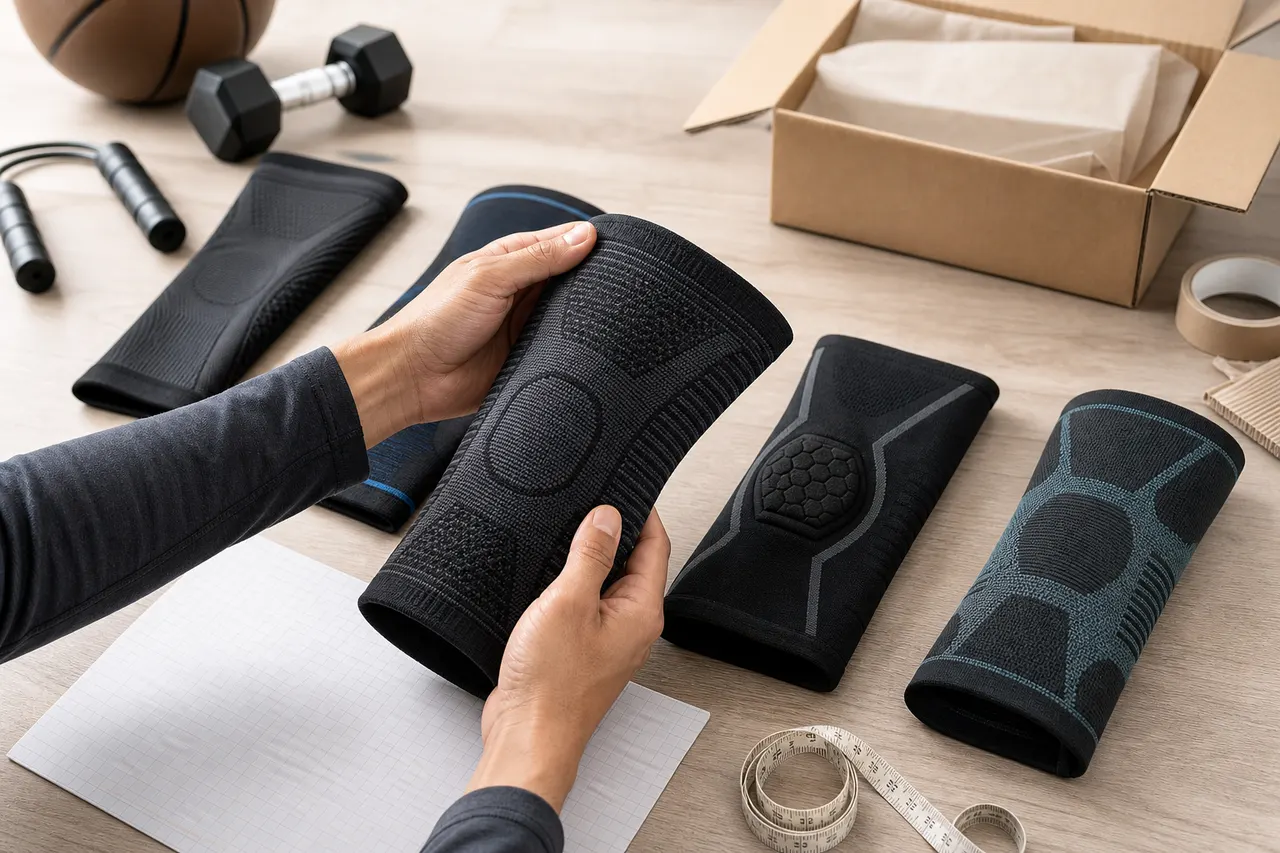
The value of a sports knee sleeve spreadsheet is not to decide which one is "best" for you, but to put usage, structure, sizing, and warehouse QC evidence into the same filtering logic. The specific problem this guide solves: how to filter out knee sleeves that are unsuitable for your target sport or lack sufficient evidence from the candidate product information provided by best-kakobuy.com, and create a candidate list ready for purchase submission.
After reading, you should be able to do three things: determine the support area and bending space you need; verify sizing and QC evidence; decide whether to keep, request additional photos, or apply for return/exchange before the return window closes.
This article does not apply to acute knee injuries, post-surgical rehabilitation, persistent swelling, joint instability, or unexplained pain. Sports knee sleeves are not diagnostic or therapeutic tools; in such cases, consult a qualified medical professional first. This article also does not judge the medical efficacy of products, and cannot confirm their protective ability based solely on images.
Data verification date: August 27, 2026. Product prices, stock, sizes, seller promises, shipping costs, taxes, return/exchange conditions, and available routes may change. Reconfirm on the actual page before ordering and submitting international parcels. This article did not obtain product page samples that could be verified item by item, so it will not fabricate specific models, prices, or inventory.
Clarify the sport and usage stage of knee sleeves first
Write down "when to wear them" before filtering products. Running, squatting, ball sports, and powerlifting have different requirements for bending range, lateral stability, and overall compression. The same knee sleeve may be suitable for warm-up but not for prolonged competition.
It is recommended to record the following first:
Sport and main movements, such as jogging, jumping and landing, cutting, squatting, or kneeling movements
Usage stage, such as daily training, warm-up, competition, or short-term post-training wrapping
Deepest knee flexion position, and whether that position is prone to pinching or rolling edges
Areas needing care: around the patella, both sides of the knee, or the entire knee
Single or pair, and confirm whether the needs for left and right legs are the same
If you only want a light compression feel, you can look at elastic sleeve-type candidates first; if the goal is to limit lateral movement, you should separately screen products with lateral structures. Do not equate "looking thick" with being safer, and do not use professional terms in product titles to replace structural verification. 🏃
Use a spreadsheet to filter by length, structure, and applicable scenarios
Do not sort by price as soon as you open the spreadsheet. First establish fields that can eliminate unsuitable products, then compare costs. It is recommended to keep at least the following columns: product name, product page status, sport scenario, length, main structure, support area, thickness info, sizing system, single or pair, visible QC evidence, missing information, return/exchange restrictions, and current decision.
You can use the following filtering order:
Delete entries that are inaccessible, have abnormal redirects, lack a clear product name, or lack basic visible information.
Filter by target sport and usage stage, and do not force irrelevant products into comparison.
Differentiate sleeve, open-hole, strap, or lateral structure candidates by support area.
Check whether the size chart provides measurement location and units.
Finally, compare product price, domestic shipping within mainland China, and weight and volume that may affect international shipping.
In the spreadsheet, use "unknown" to mark undisclosed information; do not automatically interpret blanks as absence of that structure. Products with lower prices but missing key dimensions should not be ranked ahead of candidates with complete information. 📋
Distinguish patella, lateral ligament, and overall compression needs
Different structures solve different tasks, and cannot be summarized by a single "support strength" column.
Main need | Structures to check first | Risks that still need verification |
|---|---|---|
Patella positioning | Patella opening, surrounding reinforcement ring, or adjustable strap | Whether the opening position matches your patella, whether edges rub |
Lateral knee restriction | Lateral support bars, hinges, or cross straps | Whether they hinder deep knee flexion, whether left and right structures are symmetrical, whether they are complex materials subject to shipping restrictions |
Overall compression and wrapping | Elastic sleeve, zoned knitting, or long-tube structure | Whether top and bottom edges roll easily, whether compression level can be judged from size data |
Anti-slip during movement | Anti-slip strips, longer upper and lower coverage, or adjustable fixing straps | Whether anti-slip material irritates skin, whether photos clearly show continuity and position |
A patella opening does not automatically indicate medical corrective effect, and lateral support bars cannot prove their strength by appearance alone. If the seller does not provide material, structure, and applicable range, mark those capabilities as "to be confirmed."
Judge thickness and movement space based on knee flexion range
Squats, kneeling, and frequent jumping require more knee flexion space. Thicker sleeves may provide stronger compression but may also cause bunching behind the knee; thinner styles are usually more flexible, but you cannot infer their support performance from that.
When filtering, you can do a movement match that does not rely on promotional terms:
Mainly running and continuous movement: focus on whether there are thick seams behind the knee, whether edges may roll up, and whether breathability information for long-duration activity is complete.
Mainly squatting and strength training: focus on material bunching behind the knee at maximum flexion, sleeve length, and top/bottom edge fixation.
Mainly ball sports with cutting: check both lateral structure and overall movement space; do not only look at the patella area.
Need to wear under clothing: check thickness, protruding strap positions, and whether it easily rubs against pants fabric.
When the product page does not provide thickness values, do not precisely estimate millimeters from promotional images. Side QC photos, folded state, and close-ups of seams can be used as limited structural evidence, but these photos still cannot replace actual material parameters.
Verify size chart, leg circumference measurement location, and units
Size letters do not have a unified meaning across sellers. One product's L may be close to another product's M, so the spreadsheet should record the actual leg circumference range, not just save S, M, L.
Before measuring, read the product's own size chart and confirm whether the measurement point is at the center of the patella, a certain distance above the patella, thigh circumference, or calf circumference. Use a soft tape measure against the skin, stand naturally, and do not deliberately pull the tape tight. If the page uses inches, convert 1 inch = 2.54 cm, and keep both original units and converted values in the spreadsheet to avoid errors from repeated conversion. 📏
If between two sizes, do not default to the tighter one. Consider the seller's description of compression level, material elasticity, and intended sport; if information is insufficient, list the product as a candidate needing customer service confirmation. If leg circumferences differ, record separately and decide based on the size of the leg you will actually wear it on.
Check seams, edges, anti-slip areas, and left/right QC evidence
Based on available platform information, kakobuy's standard quality inspection mainly checks appearance information such as style, quantity, color, size, and model; for sealed items with closures, they may only check outer packaging and visible damage. Therefore, QC photos can help find appearance issues but cannot prove material composition, actual elasticity, durability, or sports protection effect.
After the product arrives at the warehouse, review in the following order:
Check quantity, confirm whether it is single or pair; for a pair, check that both left and right pieces are complete.
Check that size label, color, and model match the order.
Check that front, back, and side structures match the product information.
Zoom in on top and bottom edges, behind-knee seams, strap attachment points, and support bar areas.
Check whether anti-slip areas are continuous, with no obvious adhesive failure, misalignment, or contamination.
Compare left and right pieces for length, opening position, seam direction, and logo orientation.
If standard photos do not clearly show key positions, apply for targeted additional photos within available service scope, such as "left and right pieces side by side flat, size labels facing up" or "close-up of behind-knee seam." Do not ask the warehouse to prove elastic strength, medical effect, or long-term wearing comfort, as these usually cannot be reliably determined by visual inspection. 🔍
Evaluate missing information, return/exchange restrictions, and shipping boundaries
As of the verification date, the provided kakobuy platform information shows that ordinary products can usually apply for five-day no-reason return/exchange within 120 hours after warehousing, but customized items, restricted items, intimate apparel, and products for which removal of packaging, tags, or accessories has been requested may not apply. Whether sports knee sleeves are classified as intimate apparel by the seller or platform needs confirmation for specific products; do not assume they are returnable.
Therefore, complete QC as soon as possible after receiving warehousing notice, and do not request removal of packaging or tags before considering return/exchange. If you find discrepancies in quantity, size, or visible structure, save order information and corresponding photos, and check the countdown and available after-sales operations on the actual order page.
International shipping cost cannot be judged by product price alone. According to provided platform fee explanations, total cost may include product price, domestic shipping within mainland China, international shipping, and customs declaration fee; the customs declaration fee example is about RMB 8, but it varies by shipping method. International shipping depends on weight, route, and destination; taxes and customs requirements depend on the destination country and declaration conditions. Before submitting the parcel, use the route restrictions, chargeable weight, estimated transit time, and fees shown at that time.
Combining packages may reduce repeated fixed operations or initial weight costs, but may also increase volume weight, declared value, and risk of loss in a single shipment. Splitting packages may increase fixed fees but may solve route restrictions. Since there are no actual weights, package dimensions, or route quotes for candidate knee sleeves, this article cannot conclude that combining packages is always cheaper. 🧾
When declaring, truthfully fill in product name, quantity, and value, and comply with the destination country's import requirements for materials and product categories. Do not evade taxes and inspections by under-declaring, using incorrect product names, or artificially splitting orders.
Build candidate list and complete pre-order review
The final list should not keep only one product. Keep two or three candidates with different structures that all meet basic conditions, and mark each as "can order," "need customer service confirmation," or "excluded."
Complete the final review before ordering:
Product page is still accessible, name, specifications, and selected style are consistent
Sport, usage stage, and main support area are clear
Length, structure, and knee flexion space have no obvious conflicts
Size chart includes measurement location, range, and units; leg circumference measured at the same location
Confirmed single or pair, and left/right specifications
Product price, domestic shipping, stock, and seller return/exchange conditions have been reviewed again
QC focus after warehousing and possible 120-hour processing window are understood
International route, chargeable weight, taxes, and destination country restrictions will be rechecked before shipping
All missing information has a clear resolution plan, not filled in by guesswork
If candidates still lack size measurement points, material descriptions, piece count, or key structural images, the safest decision is usually to pause ordering and ask, rather than infer from promotional titles.
The amount this method may save mainly comes from avoiding wrong sizes, duplicate purchases, and paying international shipping for unsuitable products; without real product prices, return shipping costs, and route quotes, do not fabricate specific savings figures. Its added cost is the time for filtering and QC, and it cannot eliminate risks of elasticity, comfort, and durability that cannot be seen in photos.
This method is suitable for buyers willing to filter by sport movements, leg circumference, and visible evidence, and able to handle orders promptly after warehousing. It is not recommended for people with acute injuries, those needing medical-grade braces, those unable to confirm sizes, or those hoping to get a guarantee of protective effect solely from a spreadsheet.
Content note: This article was generated by Panda-Buy Editorial Desk's automated editorial process based on specified platform information, structured filtering methods, and risk checks, and does not claim that any real person purchased, wore, or tested any knee sleeve. Highly volatile information should be re-verified on the actual order and shipping pages.
Agent Platform Shopping FAQ
1. What are kakobuy QC photos?
At kakobuy, all agent fulfillment platforms have a professional quality control team. After products arrive at the kakobuy warehouse, staff perform quality checks and take QC photos. Typically three photos are taken to check whether color, size, specifications, and quantity match the order, and to inspect for quality issues. However, for electronics, only appearance is checked. If quality issues or size/color errors are found, the team will immediately apply for a return from the seller to ensure you receive good-quality products.
2. What should I pay attention to when using an agent platform through kakobuy for the first time?
Users who access the kakobuy agent via a spreadsheet for the first time generally receive a new user shipping discount package. At the same time, you need to check the step-by-step shopping tutorial guide for beginners.
3. What types of products can I find in kakobuy's spreadsheet?
The spreadsheet on the kakobuy website includes shoes, clothing, bags, accessories, jerseys, perfumes, hats, scarves, belts, and various household items.
Browse our latest products and find your next favorite item.