kakobuy Basketball Shoe Value Guide
kakobuy Basketball Shoe Value Guide
A basketball shoe's value through kakobuy isn't determined by the listed price alone. What really needs to be compared is the landed cost, including domestic shipping, international shipping allocation, taxes, and replacement parts, and how many safe on-court uses it ultimately provides.
This article addresses the specific problem: after the item arrives at the kakobuy warehouse, how to use QC photos, fee records, and subsequent wear records to calculate a comparable cost per use, and decide whether to keep, return/exchange, rotate, or retire the shoe.
This article is not for those who need professional foot correction, post-injury return-to-play advice, or competition-grade equipment certification. It also does not judge cushioning, traction, torsional support, or authenticity based on appearance photos. Players in high-intensity games or with injury history should prioritize formal performance shoes with clear sourcing, specifications, and after-sales accountability.
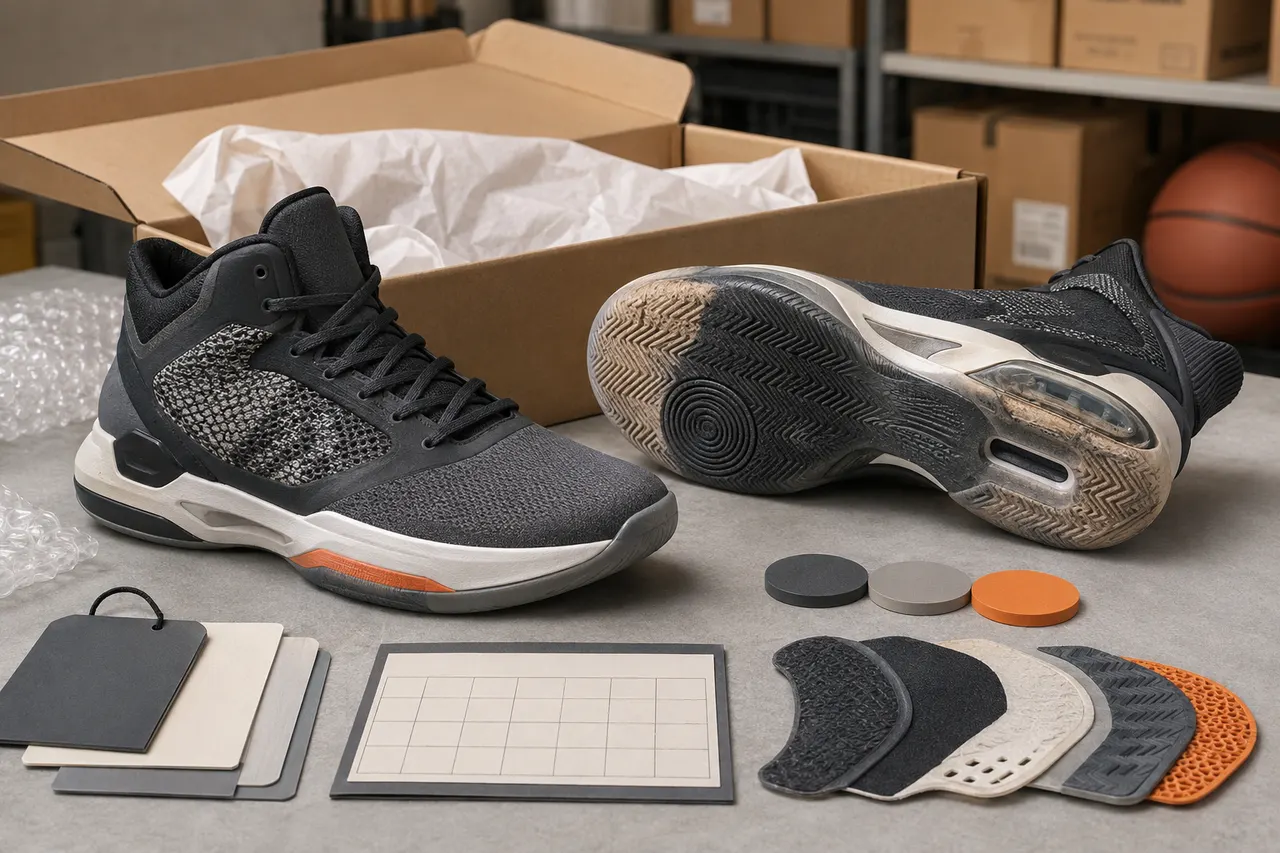
Determine basketball shoe value using landed cost, number of uses, and high-wear areas.
First Determine Weekly Playing Frequency and Rotation Needs
Start by recording the most likely usage over the next eight weeks, rather than judging based on "cheap" or "good-looking." 🏀
Playing once a week: Focus on long-term storage, sole aging, and stability for occasional use; no need to blindly buy a second pair for rotation.
Playing 2–3 times a week: Record each session's duration, court surface, and drying time inside the shoe to judge if one pair can handle all training.
Playing 4+ times a week: Rotation may improve drying conditions and reduce consecutive use, but it doesn't mean two pairs automatically lower total cost.
Outdoor concrete or rough plastic courts: The outsole is usually the priority area to watch.
Indoor wood or smoother courts: Besides the outsole, continuously check traction changes, upper support, and midsole condition.
Rewrite "need two pairs" as verifiable conditions, for example: the shoe cannot dry sufficiently between consecutive trainings, the high-wear area of the same shoe is developing too quickly, or different surfaces genuinely require separate use. Without these records, a second pair just adds initial expense.
Explain Evidence Boundaries for Price and Lifespan Judgments
Data compilation date: September 4, 2026. kakobuy's role in this article is a Chinese goods purchasing agent, warehouse inspection, and international shipping service provider, not a basketball shoe performance testing agency.
The writing materials did not provide accessible specific product pages, current prices, stock, material descriptions, seller identities, sole formulations, measured weights, or long-term wear data. Therefore, this article will not recommend specific models or give unverified lifespan numbers. Product prices, domestic shipping, service fees, international routes, taxes, and return/exchange eligibility should be re-verified on the order date and before submitting the package.
Provided platform information states that standard inspection mainly checks style, quantity, color, size, model, and visible appearance; this cannot prove cushioning performance, traction, torsional strength, adhesive durability, or brand authenticity. The information also describes a 120-hour post-warehouse return/exchange window and exceptions, but that policy is highly volatile and must be confirmed by the product page at order time and customer service.
Platform exchange rates, coupons, shipping times, and fee examples cannot be directly used as a quote for this purchase. Especially, do not convert the item's listed price to a "final price" using a fixed exchange rate, because actual landed cost is affected by payment currency conversion, chargeable weight, route restrictions, and destination country taxes.
Convert Purchase Cost into Comparable Cost per Use
First calculate the independent landed cost of the shoe:
Landed cost = item transaction price + domestic shipping within China + actual service fees + allocated international shipping for the shoe + taxes and customs fees from legal declaration + replacement parts cost − refunds received
If the basketball shoe is combined with other items in a package, do not simply divide international shipping equally by number of items. A more practical method is to separately calculate quotes for "package with shoes" and "package without shoes," and use the difference as the allocated international shipping for the shoe. If removing the shoe box changes volumetric weight, save quotes before and after removal, rather than assuming removing the box always saves money.
Cost per use = landed cost ÷ number of safe effective on-court uses
The following only demonstrates the algorithm, not actual prices or lifespans of any product:
Scenario | Landed cost | Safe effective uses | Cost per use |
|---|---|---|---|
Early structural issue | 500 CNY | 25 uses | 20 CNY |
Meets personal record goal | 500 CNY | 50 uses | 10 CNY |
Continues safe use | 500 CNY | 80 uses | 6.25 CNY |
The denominator can only include uses that have already occurred and still meet safety standards. Daily commuting, trying on, and static photos cannot automatically count as effective basketball use; after structural issues requiring retirement occur, you cannot continue to accumulate uses to lower the number.
When comparing two shoes, use the same currency, same fee basis, and similar court conditions. Comparing only listed prices systematically underestimates models with larger volume and higher international shipping proportion.
Inspect Outsole Forefoot, Heel, and Upper Flex Zones
After receiving QC photos, first confirm left/right foot, size marking, color, and style, then examine three high-risk areas in sequence. 📏
Outsole forefoot
Check if the tread patterns of left and right feet are consistent, and if edges have missing rubber, lifting, or obvious asymmetry. Tread depth in photos may be affected by lighting; rubber thickness cannot be judged solely by shadows.
Heel area
Check if the sole lays flat, if the heel is visibly tilted, if the wrapping is continuous, and if left and right heel heights have abnormal differences at the same shooting angle. Minor visual deviations may come from lens perspective; request a direct rear-view photo at eye level before judging.
Upper flex zone
Check if there are cracks, separation, severe creasing, or interrupted stitching near the forefoot flex area. Left and right shoes may naturally have minor appearance differences; what needs handling are issues that may affect structure or expand quickly.
QC can only detect visible abnormalities. Even if photos show no problems, it still cannot promise suitability for high-intensity stops, cuts, or physical play.
Judge Whether Insoles, Laces, and Other Parts Are Easy to Replace
Replaceable parts affect maintenance costs, but replacement should not alter internal shoe space or damage original fixed structures.
Laces: Record length, number of eyelets, and whether special locking systems are used. Standard laces are easy to replenish; special-shaped or integrated lacing systems are harder to replace.
Insoles: First confirm if removable, size, and thickness. Do not arbitrarily stack thick insoles for softness, as it may change heel position and fit space.
Shoe box and stuffing: Removing the box may reduce volume but increase transit compression risk. If deciding to remove the box, request necessary internal stuffing be kept, and factor possible deformation loss into the decision.
Decorative and bonded parts: Non-load-bearing decorations are easy to replace, but that doesn't mean sole separation or upper support damage is suitable for self-repair.
Costs for replacement laces or insoles should be added to landed cost. If stable fit is not achieved after replacement, continuing to invest in small accessories is usually less advisable than stopping on-court use.
Use QC Photos to Record Left/Right Shoes and High-Wear Areas
Establish a fixed photo checklist to use the same angles for warehouse inspection and subsequent wear comparison. 📷
Recommended minimums:
Front, back, and outer side photos with both shoes in frame
Size tags, tongue tags, and visible product logos of both shoes
Close-ups of left and right forefoot outsoles
Close-ups of left and right heel outsoles and wrapping
Close-ups of upper flex zones and potential separation areas
If insoles are removable, photos of both sides of insoles and inner bottom
Packaging condition and records before deciding on box removal
Name each photo with "date, left/right, location, status," e.g., "2026-09-04rightforefoot outsole_warehouse." After receiving, take photos at time 0, every 10 uses, and when abnormalities are found, under similar lighting and angles.
If QC photo angles are insufficient, request targeted supplementary photos before the return/exchange window ends. Do not upload public screenshots containing name, address, phone, full order number, payment information, or full waybill.
Weigh Single-Shoe Long-Term Use vs. Two-Shoe Rotation
Advantages of single-shoe plan: low initial investment, concentrated wear data, easier to judge true lifespan. Disadvantages: no backup; if separation, sudden traction loss, or upper support issues occur, training may be interrupted directly.
Two-shoe rotation provides backup options and longer drying time inside shoes, but increases purchase cost, international shipping allocation, storage space, and quality variance risk. Rotation does not automatically double total lifespan; only when actual records show increased total safe uses of both shoes does it generate cost benefit. 🔁
To calculate whether rotation saves money, use this method:
Rotation savings = predicted total expenditure of single-shoe plan for same total number of uses − actual total expenditure of two-shoe plan
If the result is negative, rotation does not save cash, only buys backup capability. This backup capability may be valuable for high-frequency trainers, but should be evaluated with increased package value, probability of size mismatch, coordination costs for exchanges, and risk of transit loss.
Create Pre-Order, Maintenance, and Retirement Checklists
Pre-order:
Record weekly frequency, primary court surface, and expected intervals between consecutive trainings.
Save product name, size chart, seller info, transaction price, and domestic shipping.
Confirm product page does not leave performance, material, or version descriptions in ambiguous options.
Re-verify payment amount, service fees, and return/exchange conditions on kakobuy checkout page.
Do not treat coupon face value as saved amount; record only actual discount.
After warehouse arrival:
Check left/right shoes, size, outsole, heel, and flex zones at fixed angles.
Handle obvious wrong size, wrong color, missing parts, or visible structural abnormalities within applicable return/exchange period.
Compare actual shipping quotes and protection risks with and without shoe box.
Declare truthfully according to destination country requirements; verify import restrictions, taxes, and required documents; do not under-declare or evade inspection.
After receipt:
Confirm toe space, heel stability, and left/right differences during indoor try-on.
Do not engage in high-intensity play until fit and structure are confirmed normal.
Record date, court, duration, and abnormal sensations each time; regularly photograph high-wear areas.
Fully dry before storage; do not use high heat for rapid drying.
Retirement checks:
Outsole wear has visibly changed traction performance.
Sole delamination, separation, or cracks continue to expand.
Heel support or upper load-bearing areas have irreversible deformation.
Left/right stability is noticeably different.
Shoe-related pain or instability occurs repeatedly.
Final judgment should record four outcomes: actual money saved, additional risks assumed, suitable users, and conditions not recommended. ✅
For those with low weekly frequency, existing shoes still safe, or inability to afford two pairs' initial cost, do not pre-buy for "rotation." For high-frequency trainers who can fully record wear and genuinely need backup shoes, the two-shoe plan can be observed further, but whether it saves money must be calculated after actual uses accumulate.
If a specific product lacks verifiable price, complete fees, clear QC photos, or explicit return/exchange conditions, a "worth buying" conclusion cannot yet be drawn. The most reliable decision is not guessing lifespan, but establishing a cost baseline first, then updating the answer with real, safe on-court records.
Production note: This article was generated by an automated content system based on provided platform information and cost accounting methods, and underwent checks for factual boundaries, fabricated experiences, compliance risks, and actionability; it does not claim to be purchased, worn, or tested by a real person on specific models.
Browse our latest products and find your next favorite item.